The top 5 questions about creative governance — and what they really mean
The answers that separate a well-run creative operation from a chaotic one

If you work in advertising, you’ve probably sat in an onboarding call and watched the same questions come up—every single time. Not because clients aren’t paying attention, but because creative governance is one of those topics that sounds simple on paper and gets complicated fast.
The misconceptions are understandable. Governance can feel like another approval layer, a speed bump between your team and launch day, or a headache nobody asked for. But when it’s done right, it’s none of those things.
Here are the five questions that come up most often—and what they’re really getting at.
1. “Is creative governance just another layer of approval?”
It’s the most common pushback—and the most understandable one. Nobody wants more bureaucracy in their workflow.
But here’s the thing: a one-size-fits-all approach to onboarding is always going to feel clunky. Good governance isn’t a carbon copy of what worked for the last client. It’s built around how your team actually operates—who creates, who reviews, who signs off, and how assets move across teams.
When it’s set up properly, governance doesn’t introduce new checkpoints. It organises the structure that already exists, removes confusion about who owns what, and eliminates the back-and-forth that slows everything down. Less bureaucracy. More clarity.
2. “Will governance slow my campaigns down?”
Short answer: no. But the concern makes sense.
Governance already exists in most creative workflows. The problem isn’t that it’s there—it’s that it’s slow, manual, and prone to human error. Teams spend hours reviewing language, legal copy, aspect ratios, file formats, and technical specs. And even after all that effort, things still slip through.
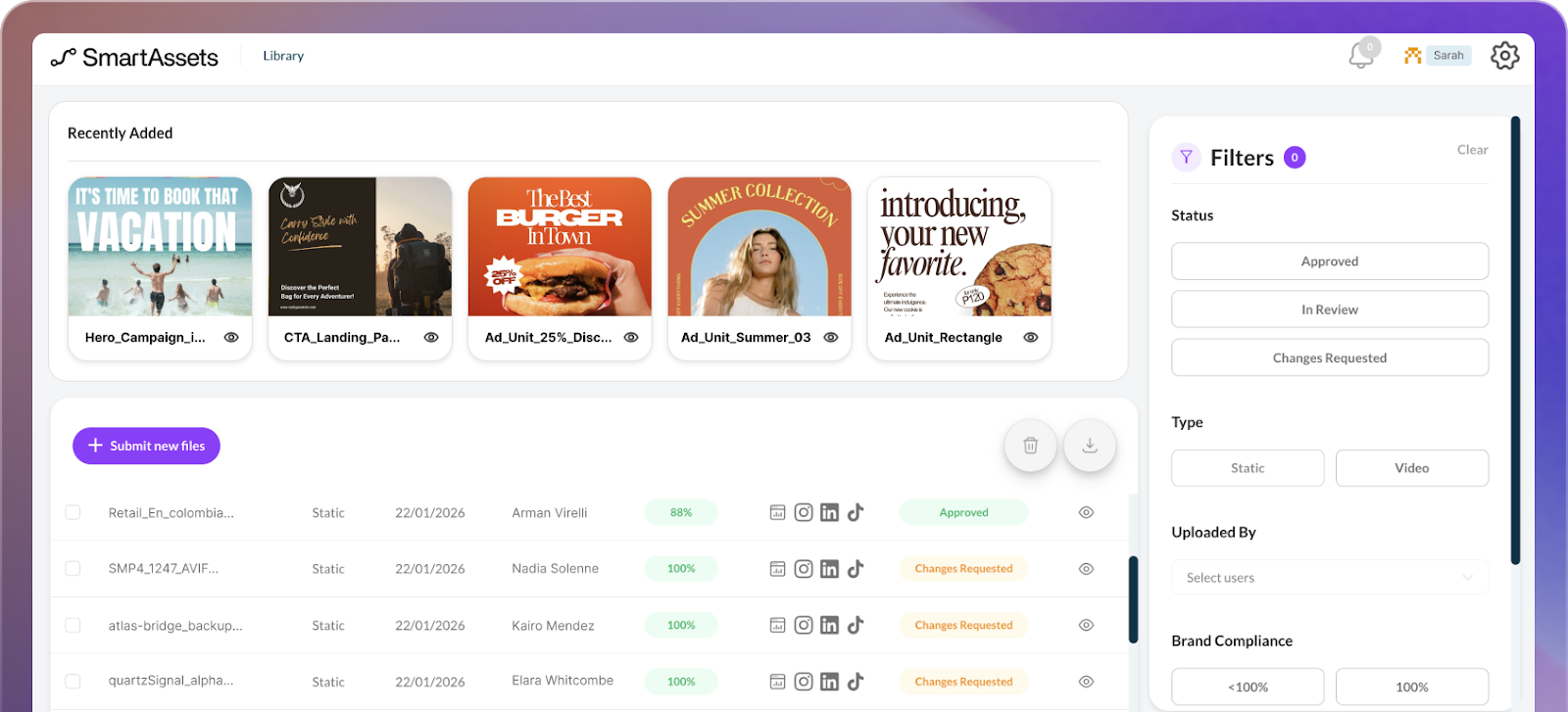
Automation changes that. When quality control is embedded and consistent, teams aren’t firefighting—they’re focused on the upstream work that actually moves the needle. Campaigns managers, producers, and brand managers get their time back. And they launch knowing the safeguards are already in place.
3. “Who owns creative governance—brand, agency, or platform?”
Ownership can get murky fast, especially when multiple teams are involved. The honest answer? It depends on how the platform is configured—and that configuration should reflect your existing structure.
From the start of onboarding, permissions and approvals are mapped to the client’s own hierarchy. Brands know where their responsibilities begin and end. Agencies understand what standards are being enforced. The platform just provides the visibility that makes it all legible.
When ownership is established early, collaboration becomes stronger. Nobody’s second-guessing who’s responsible for what.
4. “How do we scale creative without losing control?”
More assets. More markets. More stakeholders. Scaling sounds like the dream until you’re buried in version confusion, inconsistent approvals, and duplicated work.
The answer isn’t to slow things down—it’s to invest in the right foundations before going live. A thorough understanding of how the platform will be used, by whom, and at what volume allows governance to be built in a way that scales naturally.
Small inefficiencies that are fine at low volume become significant problems at scale. Sorting them out upfront prevents that.
And onboarding doesn’t end at go-live. Governance should evolve alongside usage—which means the groundwork laid at the beginning continues to pay off as the operation grows.
5. “What actually happens when governance is missing?”
The answer usually reveals itself quickly.
Manual processes create inconsistencies. Errors surface too late. Teams spend time fixing things that should never have been broken. Collaboration becomes reactive rather than structured—and everyone is constantly catching up rather than moving forward.
When creative assets pass through consistent, standardised checks, the difference is immediate. Campaigns launch in better shape. Teams focus on optimisation rather than correction. And the link between governance and performance stops being theoretical.
The bottom line
Clients don’t ask these questions because they’re skeptical of governance. They ask them because they want structure that reflects how they actually work—not a generic system dropped on top of their existing one.
Creative governance, when it’s tailored properly, provides the clarity that onboarding promises and rarely delivers. It reduces repeated explanations, strengthens collaboration, and—most importantly—ensures that clients keep getting value well beyond go-live.
Need help laying the groundwork for everything that’s to follow? SmartAssets can help.
Download started, click here if it hasn't already.


.png)

.png)

.jpg)